
For many travellers, a safari is something that’s been on the list for years. It’s often a once-in-a-lifetime trip, carefully planned and long anticipated. With that in mind, it’s easy to focus on the highlights: the Big Five, the photographs, the idea of being out in the African bush. But what many people don’t realise is that there is so much more to a great safari experience – and what you should...
Known by Name, Not Room Number: The Case for choosing a Small Boutique Safari Lodge for your next Big Five African Safari
Posted by Grant on Thu August 6, 2026 in Safari Factfile.
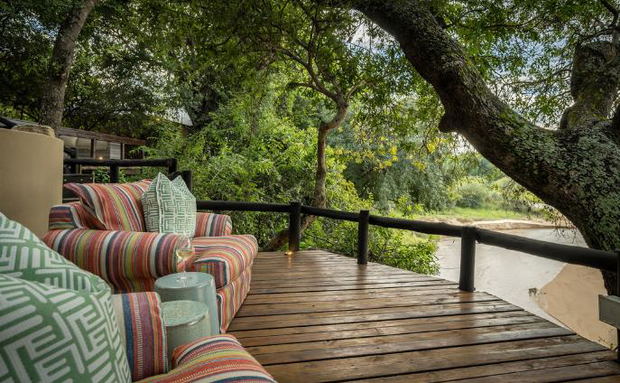
Big lodges compete on scale. Shimungwe Lodge offers something that's harder to copy: knowing your name, your coffee order and exactly what you came to see. Here’s why seasoned safari travellers increasingly choose small over spectacular.
Ask most first-time safari travellers what makes a great lodge, and they will give you a list: The infinity pool. The size of the suite. The number of stars. Ask a guest who has been on safari a few times, and the list disappears. What they remember instead is a lodge manager who remembered their names without checking a clipboard first. A guide who stopped the vehicle not because a checklist demanded it, but because they noticed something in the bush was worth stopping for. A small, boutique safari lodge, more often than not, is where that shift in experience happens.
It is a quiet trend among seasoned travellers: as the number of safaris climbs, the size of the lodge tends to fall. Bigger camps are impressive on a website. Smaller ones are the ones people tell stories of, years later. So what actually makes a safari unforgettable — the scale of the place, or the depth of the experience inside it?
You’re More Than a Room Number
At a large lodge, hospitality is necessarily a system. Forty guests move through breakfast, drives and dinner on a schedule built for volume, and even excellent staff can only extend so much individual attention across that many rooms. At a small safari lodge, hospitality stops being a system and becomes a relationship.
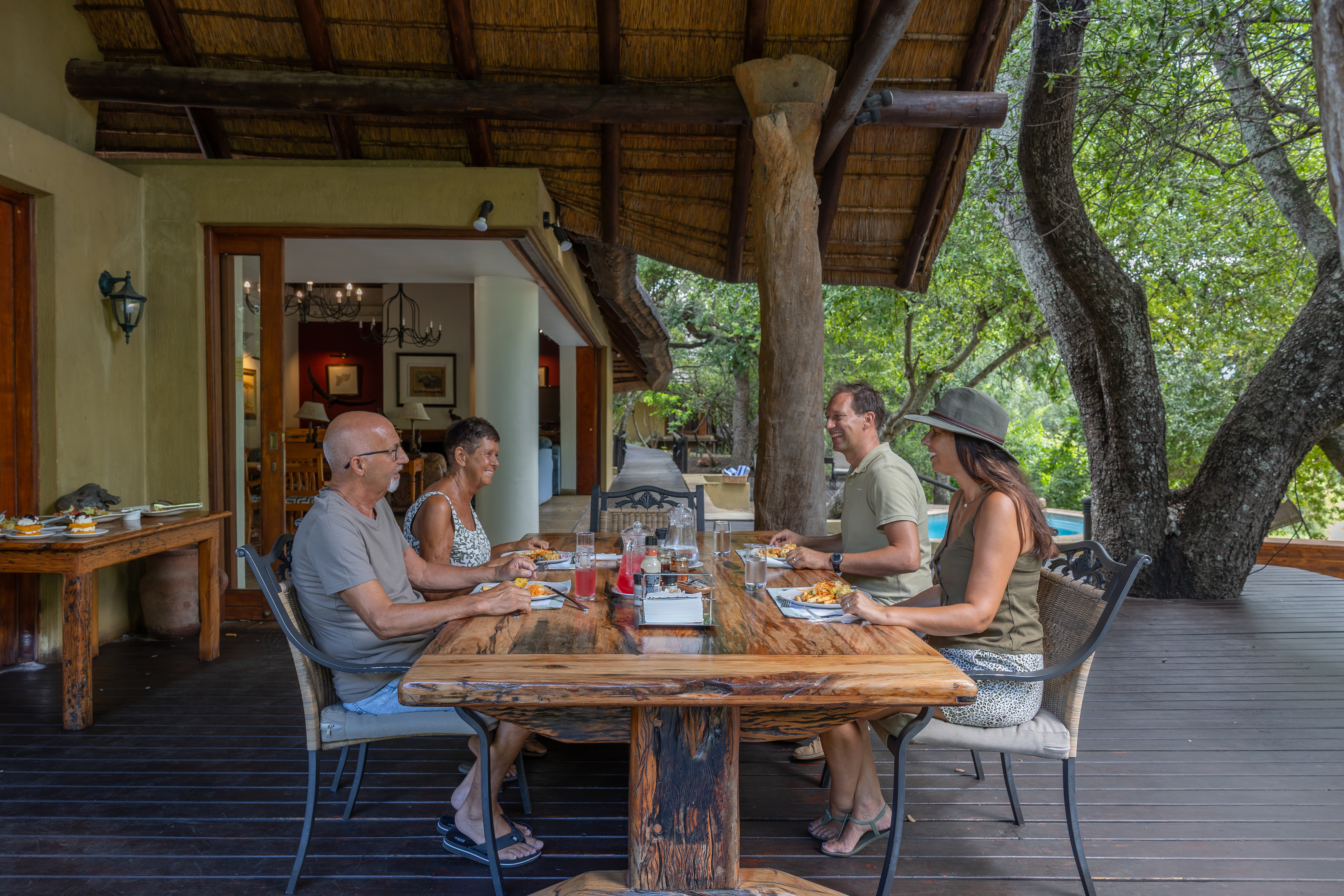
Shimungwe, tucked on the banks of the Timbavati River in Thornybush Game Reserve within the Greater Kruger ecosystem, was built around exactly this idea. With only four suites, the lodge never accommodates more guests than its team can genuinely get to know. Lodge manager Nataly has built a reputation among returning guests for something disarmingly simple: she remembers them. Not just a name, but how they take their coffee, whether they photograph birds or big cats, what they mentioned in passing about a wedding anniversary. That information doesn’t sit in a database. It sits in a person, and it shapes the days that follow.
This is the real argument for an intimate, boutique safari lodge over a larger one. It isn’t about exclusivity for its own sake. It’s that service can only become personal in a model where staff and guests cross paths more than once a day.
Picture a couple, celebrating a fortieth wedding anniversary, arriving for a four-night stay. On the first evening, they mention in passing that they met on a research trip studying elephants decades earlier. Nobody writes it down, but nobody forgets it either. Two nights later, when the conversation turns back to it over dinner, the team marks the special occasion — a toast, a story shared, an acknowledgement that this stay means something particular to these two people. It’s a gesture of sincerity, not a reinvented itinerary, but it is the kind of thing that only happens when a lodge is small enough for staff to remember what a guest told them three days ago.
More Space. More Peace.
Spend a morning at a private safari lodge and the difference isn’t only in who greets you — it’s in the rhythm of the day itself. There is no queue for the coffee station. No fixed departure time dictated by fifty other guests boarding a fleet of vehicles at once. Mornings begin slowly: the sound of a kettle, the outline of the bush emerging as the sky lightens, a guide checking in without hurrying anyone along.
At Shimungwe, that unhurried pace is not an accident, it’s by design. It is what a smaller number of guests actually buys you — not more amenities, but more time. Guests describe sitting on the deck with nothing scheduled for the next hour and realising they had forgotten what that felt like. That sense of space is one of the most consistent things travellers mention after a stay at a smaller lodge, and it is very hard to manufacture at scale. You cannot build peace and quiet for two hundred guests. You can only build it for a few.
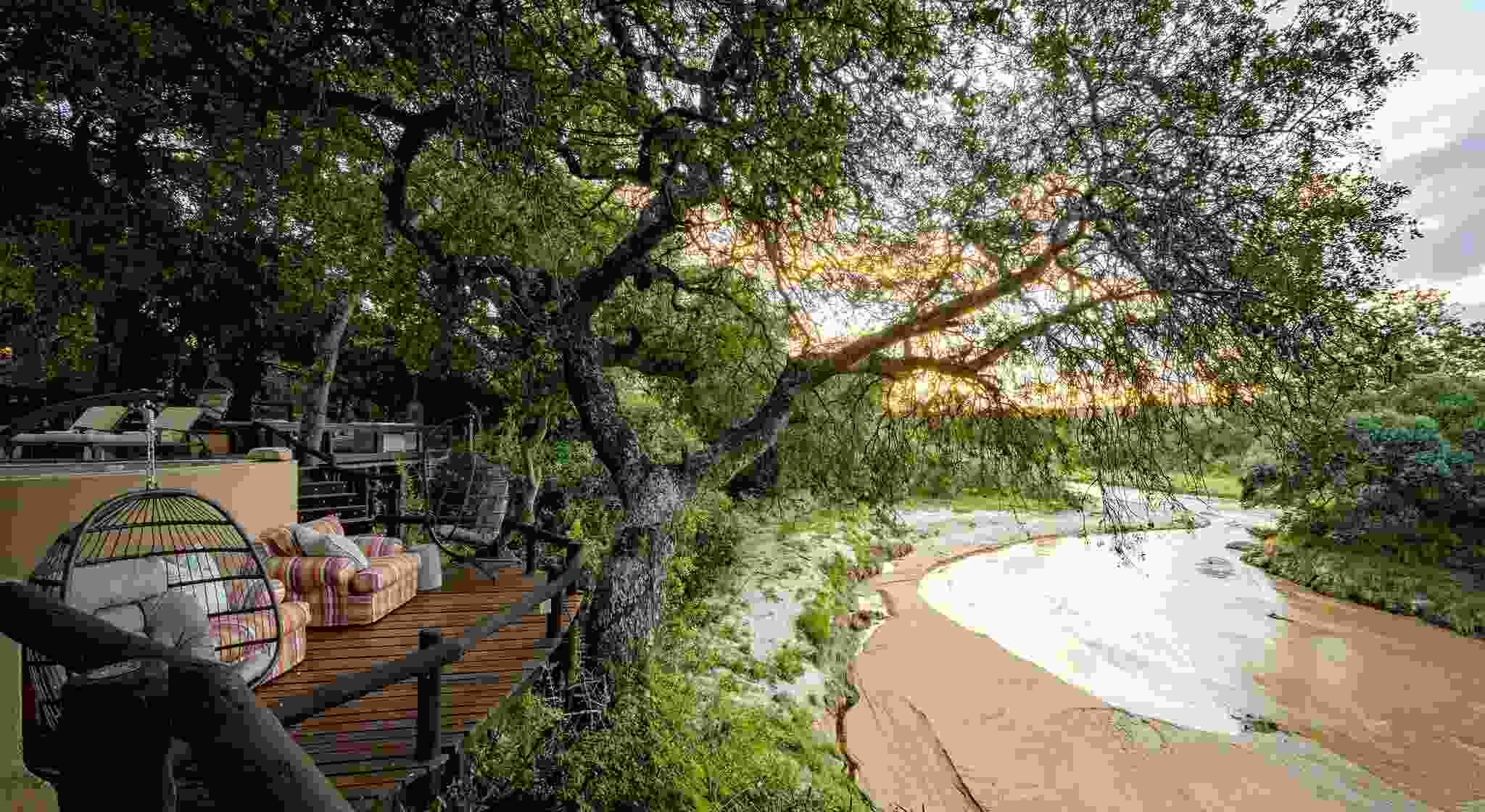
There is also a quieter, more personal reason this matters. Research has found that first time guests often arrive chasing adventure and the novelty of a genuine wilderness, while experienced guests are more likely to be searching for peace — a chance to reconnect with a landscape that feels like their own, at a pace nobody back home would allow. A small boutique safari lodge happens to serve both motivations equally well, because both depend on the same thing: not being one of a crowd.
Every Safari Becomes Personal
Ask what changes when a guide isn’t managing a full vehicle roster across multiple game drives, and the honest answer is flexibility — within reason. At a lodge with only four suites, groups occasionally book Shimungwe in its entirety, and when that happens the whole day really can be shaped around one family or one group of friends: their pace, their interests, their wish list. That’s the exclusive-use version of the story, and it’s a genuine option here.
More often, though, a vehicle carries two or three couples who may not know each other, each with their own quiet list of hopes for the day — one drawn to raptors, another chasing a decent photograph of a leopard, another simply wanting to see elephants up close. A good guide doesn’t pretend those interests don’t compete for attention. What he can do, knowing his guests, is weave a little of everyone’s interest into the drive as the morning allows — pausing a beat longer at a raptor’s nest if the light and the moment allow it, mentioning a species he knows one guest has been hoping for, without derailing what everyone else came to see. It’s a balancing act, not a guarantee, and that honesty is part of what makes it trustworthy rather than a marketing promise.
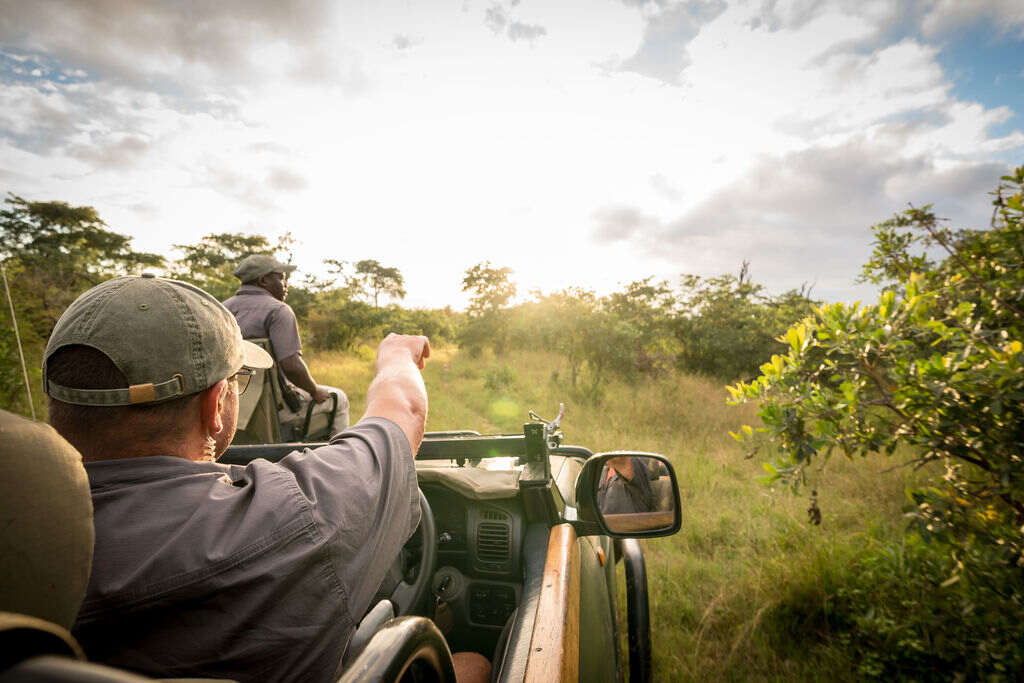
What doesn’t change, whatever the vehicle looks like on a given morning, is the quality of interpretation. Research into guided game viewing consistently finds that a guide explaining the tracks, the alarm calls, the relationships between species shapes memory more powerfully than the sighting itself. A leopard seen in silence is a photograph. A leopard explained, in context, by someone who has tracked that same animal for years, is a story every guest on the vehicle carries home — whoever they came with.
Genuine Connections
The evenings at a small lodge tend to tell you more than the itinerary does. Guests gather around the fire before dinner, not because a schedule says so, but because there is nowhere else they would rather be. Meals are often shared at one table rather than split across dozens of covers, which means conversation drifts easily between guests, guides and the team preparing the food. At Shimungwe, guests regularly find their way into the kitchen to talk to Gift, whose home-baked bread has become something people mention unprompted in their reviews, or into a longer conversation with a guide about the anti-poaching work happening quietly in the reserve around them.
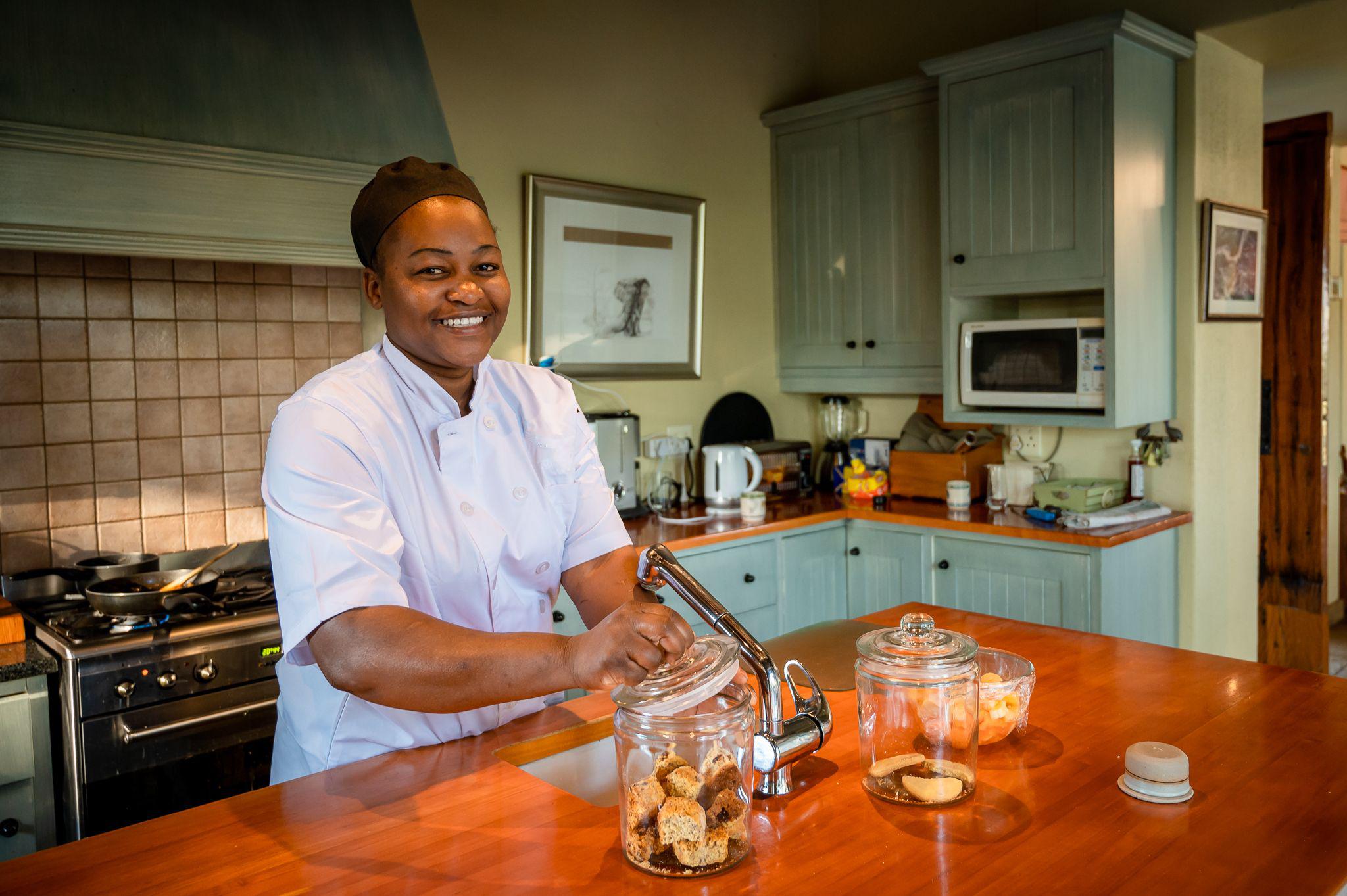
None of this is choreographed. It is simply what happens when a lodge is small enough that guests, guides and hosts can happily and easily interact. One recent guest summed up a stay at Shimungwe as “the most personal, quietly luxurious and peaceful bush experience” — and that sentence captures something a brochure never quite can. People don’t leave a small safari lodge feeling like they stayed at a hotel. They leave feeling like they enjoyed a more intimate, real experience.
The Little Things Become the Big Memories
It is rarely the grand gestures that guests describe first. It’s the smell of biscuits coming out of the oven before a sunrise drive. A coffee handed over exactly the way it was ordered the previous morning, without having to ask. Elephants moving past the deck at dusk, watched from a chair rather than through a fence of other guests jostling for a view. A guide who hears a single alarm call from a francolin and quietly repositions the vehicle, certain that something is coming.
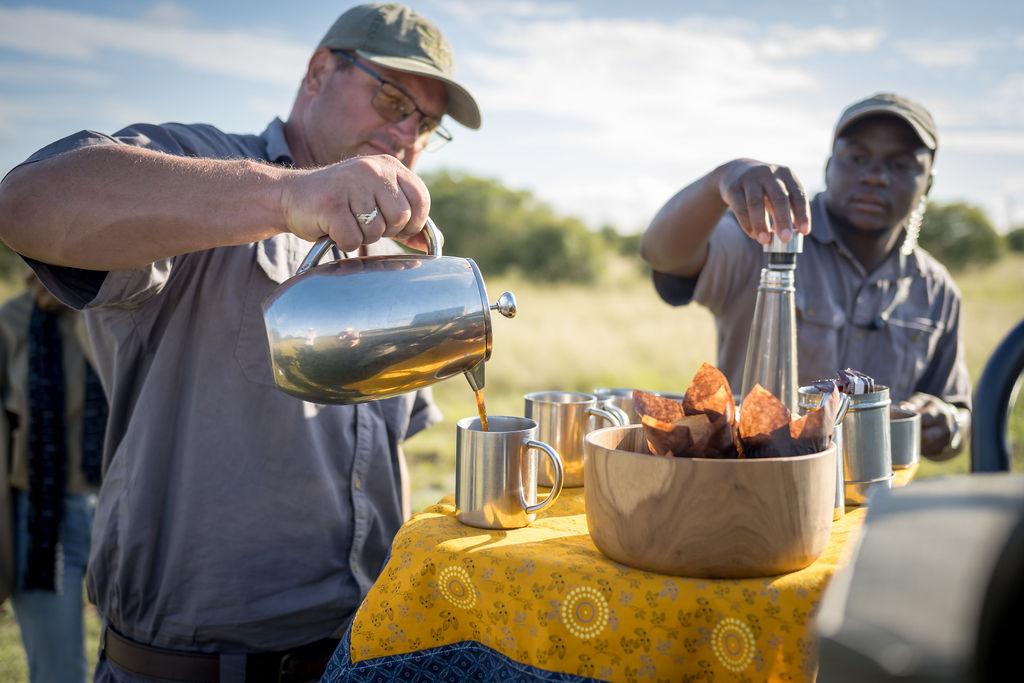
These moments are not extravagant. That is precisely why they last. Research into boutique travel experiences consistently finds that guests remember thoughtful, small-scale details — a personal touch, a moment of being truly seen — far more vividly than the size of a room or the thread count of the linen. A birthday marked with an unscripted gesture. A last-morning game drive extended by twenty quiet minutes because they found something magical in the bush. These are the details that don’t photograph well for a brochure, and yet they are exactly what people describe, unprompted, months after they’ve gone home.
Luxury Is Having Less
Luxury, in the way most of the industry still sells it, means having more: more space, more amenities, more staff, more of everything stacked on top of itself. A small safari lodge quietly makes the opposite argument. Sometimes luxury is having less — less noise, less rushing, fewer guests sharing the same sighting, fewer strangers at the next table.
What’s left, once all of that is stripped away, is what guests actually came for: more genuine wildlife encounters, more time with people who know the bush and know your name, more stories worth retelling. A safari isn’t remembered because the lodge had the biggest pool. It’s remembered because of how it made you feel — and that has never required scale. It has only ever required attention.
If you’re looking for a safari where you’ll be known by name rather than room number, Shimungwe Lodge offers an intimate, boutique safari experience in the Greater Kruger shaped by genuine hospitality, exceptional guiding and the magic of the African bush. If you’re beginning to plan your own stay and want to talk through how Shimungwe could shape a trip around what matters to you, we would love to hear from you.
---
Written by Grant, owner of Shimungwe Lodge in Thornybush Game Reserve, part of the Greater Kruger ecosystem. Guests staying at Shimungwe Lodge enjoy game drives at dawn and dusk each day, where sightings of the Big Five are common. If you’re interested in finding out more for planning your Big Five African safari, we’d be happy to help you.
Further Reading
The Biggest Mistakes People Make on Their First Safari (And How to Avoid Them)
Sun April 26, 2026
Read This Article
What Does Shimungwe Mean? | The Story Behind Our Lodge's Name | Shimungwe Lodge
Fri April 3, 2026
Read This Article
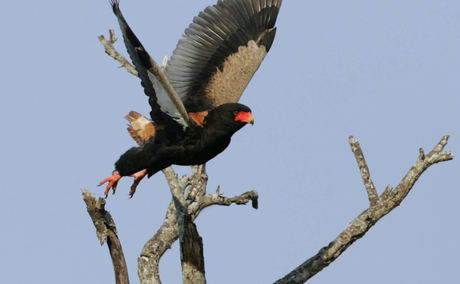
Every place worth visiting has a story behind its name — and at Shimungwe Lodge in the Thornybush Game Reserve, that story begins on a game drive, with a question asked of a ranger and a single word that changed everything. Shimungwe is the Shangaan name for the Bateleur eagle — one of Africa's most distinctive and captivating birds of prey — and the tale of how owners of Shimungwe Lodge found...
Gather Them in the Wild: Planning an Unforgettable Multi-Generational Family Celebration at a Luxury Safari Lodge in South Africa
Mon March 16, 2026
Read This Article
Some milestones deserve more than a dinner table celebration. At Shimungwe Lodge, in the heart of the Greater Kruger, families and friends are discovering that the African bush offers something rare — a setting where every generation is captivated, every moment feels personal, and where the celebration becomes a far greater experience for everyone.
Share This Post